Corporate boardrooms are currently ghost towns for actual productivity. McKinsey recently exposed a bluff where nearly 90% of AI pilots are failing to scale or deliver a single cent of profit. Most analysts blame the culture or the lack of a “roadmap,” but that’s a convenient lie used to protect budgets. The truth is much simpler and more insulting to your intelligence.
The Pilot Trap and the Cloud Latency Lie
Most businesses are trapped in a loop of experimentation because they are trying to run their workflows on anemic, cloud-dependent machines. Relying on remote servers to handle complex reasoning creates a massive latency trap that kills any hope of a fluid day. When your machine has to “call home” for every minor calculation, the resulting delay makes agentic efficiency impossible. You’re left sitting there, staring at a loading icon while your competitors are actually getting work done.
The cost of this cloud dependency is hidden in your monthly bills and your wasted hours. Businesses are throwing money at subscription services that promise the world but deliver a stuttering experience. It’s a mess of slow connections and high-security risks that most professionals are finally starting to notice. If you’re tired of being tethered to a server farm in another state, you aren’t alone.
Why Local Processing for AI Agents is the Only Path Forward
The massive gap between hype and results is a physical bottleneck, not a software flaw. If your machine isn’t handling the heavy lifting on the desk right in front of you, you’re just paying for a glorified chatbot that stutters under pressure. Reliable, high-speed local processing for ai agents is the only way to move past the “testing” phase and actually get to work. You need silicon that doesn’t ask for permission before it starts a calculation.
Local power gives you the freedom to run models without worrying about who else is looking at your data. It’s about taking the handcuffs off your workflow and letting the machine do what it was bought to do. Most “pro” setups are currently failing because they don’t have the guts to run these tasks without a cloud umbilical cord. It’s an embarrassing situation for anyone who considers themselves an early adopter.
Silicon Evidence and the 45 TOPS Threshold
The shift at CES 2025 has finally exposed why these early experiments are failing. Previous machines lacked a dedicated engine to handle billions of parameters without choking the main processor. We are now seeing the arrival of silicon designed specifically to bypass the cloud entirely and keep the work on your desk. This isn’t about minor upgrades anymore, it’s about a total shift in how we think about computing power.
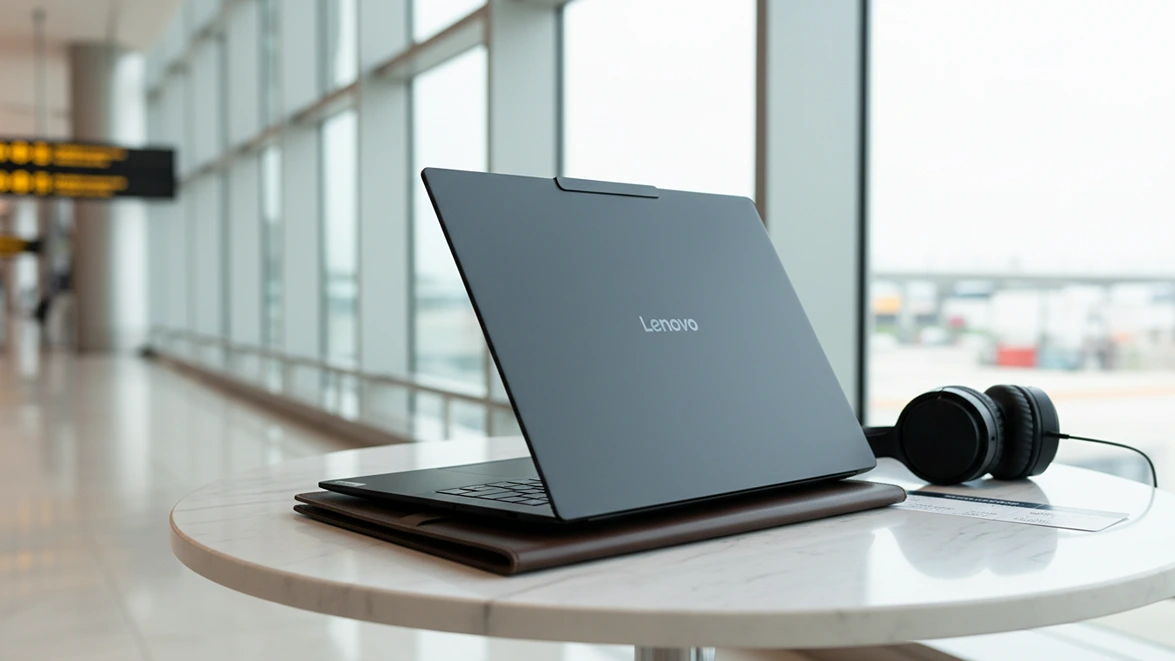
The Lenovo Yoga Slim 7x is a clear winner in this architectural pivot. By utilizing the Snapdragon X Elite, it delivers 45 trillion operations per second (TOPS) through a dedicated NPU. This isn’t just a spec bump for the sake of marketing; it’s the physical requirement to run agents that actually function. You can’t fake this kind of speed with a cloud connection, no matter how fast your internet is.
Escaping the Accuracy Gap with Brute Force
McKinsey’s data points to a persistent accuracy gap that keeps businesses from trusting their automated workflows. Complex models require massive amounts of local memory to maintain precision during long tasks. If your machine runs out of “room to think,” the output turns into a hallucinating mess that requires constant human babysitting. You end up spending more time fixing the AI’s mistakes than you would have spent doing the job yourself.
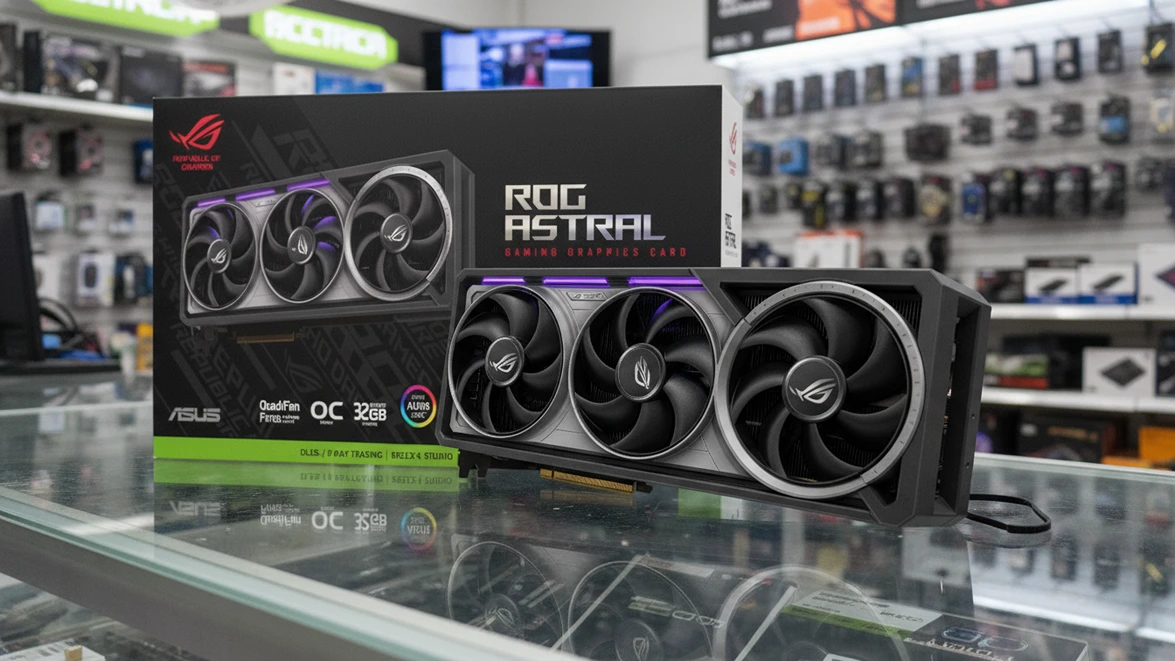
This is where the brute-force approach becomes a professional need rather than a luxury. High-end components like the ASUS ROG Astral GeForce RTX 5090 offer 32GB of GDDR7 memory. This massive pool of high-speed VRAM allows the machine to hold entire models locally, ensuring that accuracy doesn’t degrade when the task gets difficult. This outlook is the difference between a tool that works and a toy that breaks when you actually put it to use.
The Failure of Last Years Gear
The reason 94% of companies aren’t seeing a profit impact is that they are treating this shift like a standard software update. You cannot run a complete workflow overhaul on a machine built for spreadsheets and web browsing. The processing demands have shifted, and most “pro” laptops sitting on desks right now are already obsolete. It’s a tough pill to swallow, especially if you just spent a few thousand dollars on a machine last year.
Those who are winning in this era are the ones who stopped waiting for the cloud to get faster. They are investing in local silicon that can execute multi-step plans in milliseconds. If your machine doesn’t have a dedicated engine for these tasks, you’re just funding a very expensive experiment that is destined to fail. The market doesn’t care about your budget cycles; it only cares about who can execute the fastest.
Redesigning the Workflow for Local Power
A real redesign of your business process requires gear that can keep up with your brain. Waiting five seconds for a response from a server in another state is a productivity killer that adds up to thousands of wasted hours over a year. Moving to a machine like the Yoga Slim 7x allows for a 23.5-hour battery life while maintaining the local power needed to actually finish jobs. It’s about having a machine that works as hard as you do without needing to be plugged into a wall or a cloud.
The situation here is simple. Stop buying the marketing hype about “cloud innovation” and start looking at the TOPS and VRAM on your desk. The silicon is finally catching up to the promises, but only for those willing to pay for the right gear. Most people will stay stuck in the 90% failure group because they’re too cheap to upgrade their physical tools. Don’t let that be your excuse.
McKinsey is right about the failure, but they’re wrong about the reason. The technology isn’t failing; the outdated machines people are using to run it are. The transition from a “pilot” to a “high performer” starts by removing the cloud bottleneck and taking control of your own processing power. It’s a fundamental shift in how we approach work, and it’s one that requires a serious look at what’s inside your computer.
Anything less than a dedicated AI engine is just a placeholder. The winners of 2025 will be the ones who realized that local execution is the only thing that actually changes the math. It’s time to stop experimenting and start processing. If you want results, you have to stop playing with toys and start using real tools.