Gaming communities often chatter about secret numbers that define a gaming rig build. Most conversations focus on how many fans are spinning or how large the shroud looks on a desk mat. But the Gigabyte RTX 5070 technical throughput hides a specific truth that marketing teams ignore. This card sits in a vague space that confuses builders who only look at the box art.
Comparing this unit to the smaller version reveals where the money actually goes. The RTX 5060 handles 1080p needs without effort while the Eagle model adds more VRAM and a wider path for data. It looks superior in a list of numbers, but the actual results in a gaming rig suggest a different story. The technical secret is that the extra cost doesn’t always buy more speed.
Technical Metrics and Hardware Layout
| Hardware Component | GIGABYTE RTX 5070 Eagle | GIGABYTE RTX 5060 WINDFORCE |
| Memory Capacity | 12GB GDDR7 | 8GB GDDR7 |
| Memory Bus | 192-bit Throughput | 128-bit Throughput |
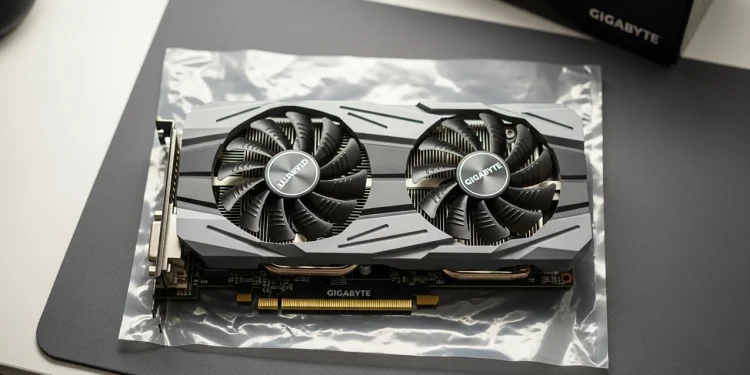
| Cooling Setup | Triple Fan WINDFORCE | Dual Fan WINDFORCE |
| Interface | PCIe 5.0 | PCIe 5.0 |
| Build Type | Small Form Factor (SFF) | Standard Compact |
Throughput Metrics and Thermal Engineering Results
A 192-bit data path defines the hardware movement for this unit. Most buyers chase the memory capacity number while ignoring the actual width of the data lane. Technical truth remains that high resolution outcomes depend on this specific bit-width to maintain steady visual results.
Standard 128-bit hardware creates a technical ceiling that limits higher density tasks. This wider interface allows the 12GB of GDDR7 to breathe during heavy technical loads. The RTX 5060 hardware details identify exactly where that smaller unit reaches its technical limit.
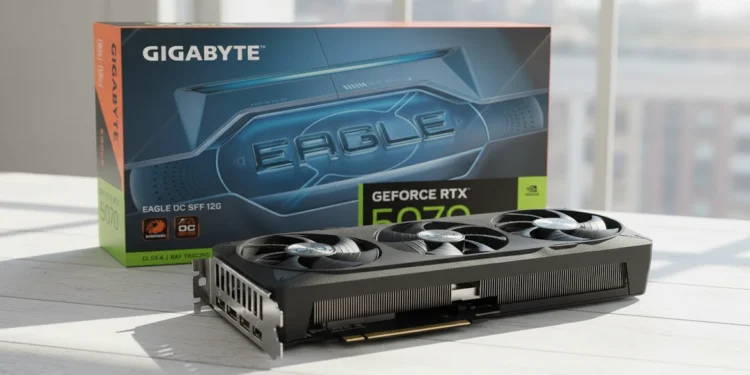
Triple fan WINDFORCE engineering manages the thermal data for the 5070 Eagle. Server-grade conductive gel and composite copper heat pipes handle the hot spots on the board. Technical documentation for NVidia graphics standards confirms that these hardware metrics are requirements for stable high-resolution rendering in modern builds.
PCIe 5 0 Bandwidth and Electrical Needs
PCIe 5.0 integration is a future-proofing win that both cards share. This interface allows for a massive amount of data to travel through the system board at once. It is a forward-thinking engineering choice that prepares a build for the next few years of software shifts. The hardware is ready for the bandwidth demands of upcoming titles that will stress the motherboard lanes.
Power draw is another area where the technical secret becomes clear. The RTX 5070 requires a 750W power supply to maintain stable energy delivery during a long session. This is a significant jump over the requirements of the smaller card. The extra electrical demand is a hidden cost that most buyers forget to calculate when they see the flashy shroud.
Stable energy delivery is a requirement for the RTX 5070 Eagle and technical facts make it clear that power considerations must be taken into account to ensure efficient operation of this hardware. The Corsairs RM750e modular hardware was used as the test candidate in determining if the video adapter remained stable during activities and it was identify as a safe fit for the 750W demand of a modern gaming rig.
The Final Decision for Your Gaming Rig
Technical goals dictate which hardware belongs in a rig. The RTX 5070 Eagle is a specialized tool for users who need 12GB of VRAM and wider memory throughput for higher resolutions. Standard setups will find better value in the smaller card while enthusiasts will appreciate the thermal headroom of the triple fan layout.
Choosing between these units requires an honest look at technical outcomes. The extra VRAM and wider bus provide the muscle needed for 1440p gaming. This hardware configuration handles heavy data loads with ease, making the GIGABYTE RTX 5070 Eagle a serious candidate for professional-grade rigs.
GIGABYTE GeForce RTX 5070

GIGABYTE GeForce RTX 5070 Eagle
The GIGABYTE RTX 5070 Eagle utilizes 12GB of GDDR7 memory on a 192-bit interface for high resolution output. A triple fan WINDFORCE system handles thermal outcomes while the PCIe 5.0 standard ensures technical stability for modern motherboards. Integrated DisplayPort 2.1 and HDMI 2.1b ports support the latest high refresh rate gaming hardware.
As an affiliate, we may earn a commission from qualifying purchases.
The 192-bit interface on the Gigabyte RTX 5070 Eagle identifies a specific hardware ceiling while the technical output of the RTX 5060 hardware facts provide the evidence needed to expose the expensive trap most builders fall into when chasing flashy marketing hype.