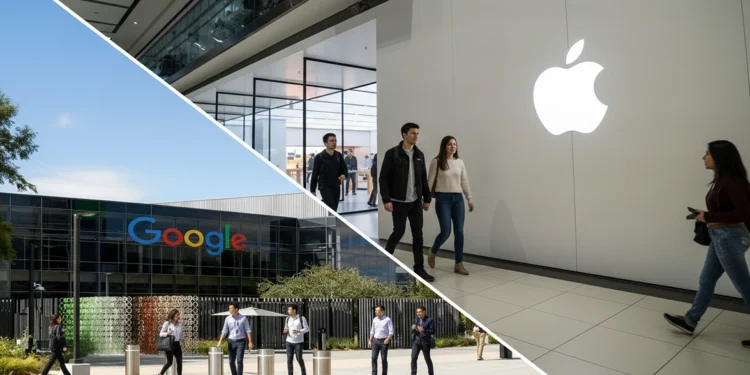
Apple has spent the last decade convincing the world that it controls every aspect of the user experience, from the silicon to the software. However, the recent reports surrounding “Project Campos” suggest that the walls of the walled garden are finally crumbling under the weight of incompetence. The company plans to completely overhaul Siri in iOS 27, not by fixing its own code, but by grafting Google’s brain onto the iPhone’s interface.
This isn’t just a software update; it is a public admission that Apple’s internal AI development has failed to compete. After the lukewarm reception of the initial “Apple Intelligence” features in 2024, Cupertino had to make a choice between pride and survival. They chose survival, even if it meant shaking hands with their biggest rival to keep the iPhone relevant.
The Failure Of Siri And The Pivot To Chat
Siri launched in 2011 as a voice assistant designed to handle simple tasks like setting timers or checking the weather. Over time, that novelty wore off as competitors like ChatGPT and Claude evolved into complex reasoning engines that could write code and summarize novels. Siri remained stagnant, offering frustrating web search results instead of actual answers.
“Project Campos” is the code name for the initiative to delete the old Siri interface entirely. Reports indicate that the new version will abandon the rigid “command and response” structure in favor of a conversational chatbot interface. Users will no longer have to memorize specific phrases to get things done; they can speak or type naturally, just as they would with a human assistant.
This shift brings the iPhone in line with modern expectations, but it arrives years late to the party. While early adopters have been using third-party apps to generate content for years, Apple is betting that the mainstream user is lazy enough to wait for the operating system to catch up. It is a gamble on convenience over innovation.
Why Google Gemini Is The Engine
The most shocking detail in the leak is that Apple is not using its own proprietary model to power this new intelligence. Instead, they struck a deal to use a custom version of Google Gemini, known internally as Apple Foundation Models version 11. This essentially turns the iPhone into a premium hardware shell for Google’s software services.
It raises serious questions about why a company with Apple’s resources couldn’t build a competitor in-house. You can read our detailed breakdown on Gemini’s influence on the mobile market to understand why Google’s architecture has become the industry standard that even Apple cannot ignore. The partnership suggests that the gap between Apple’s research team and the rest of the industry was too wide to close before the iOS 27 deadline.
By outsourcing the heavy lifting to Google, Apple secures a competent backend without burning billions more on failed experiments. However, it dilutes the brand’s core promise of vertical integration. The iPhone is no longer purely Apple; it is a hybrid device dependent on a competitor’s server farms to function correctly.
The Only Feature That Actually Matters
Chatbots are currently trapped inside their own applications. If you ask ChatGPT to edit a photo in your library or delete a spam email, it cannot help you because it lacks system-level access. This “friction” is the only moat Apple has left to defend its territory against the encroaching apps.
The reports claim that the new Siri will have deep integration into core apps like Mail, Photos, and Xcode. This allows the AI to perform actions rather than just generating text. A user could theoretically ask Siri to find a photo of a specific dog from 2022, crop it, and email it to a contact without ever touching the screen.
Threat To OpenAI And Standalone Apps
If Siri becomes a competent chatbot that lives on the lock screen, the need for standalone apps diminishes rapidly. Currently, OpenAI boasts millions of daily active users on iOS, but that dominance relies on Apple lacking a native alternative. Convenience is the ultimate killer of third-party software.
Most users will choose the path of least resistance. If holding the side button summons a Gemini-powered chatbot that knows your calendar and text history, opening a separate app feels like unnecessary work. Apple is attempting to Sherlock the entire generative AI category by baking the functionality directly into the OS.
This strategy threatens to wipe out the casual user base for competitors overnight. Power users may still prefer specific models for coding or creative writing, but the average person just wants a quick answer. Apple is leveraging its hardware monopoly to reclaim the customers it lost to the AI boom.
Privacy Trade-Off
Apple built its reputation on privacy, famously declaring that what happens on your iPhone stays on your iPhone. Deep integration with a Google-powered model complicates that marketing pitch significantly. For Siri to control your email and photos, it must read and understand them first.
Handing that context over to a model developed by a data-advertising company requires a massive leap of faith. The current iPhone 16 Pro manages some tasks locally, but the heavy lifting required for Project Campos will almost certainly require cloud transmission. It blurs the line between a private device and a surveillance node.
The Hardware Timeline
Waiting until late 2026 for iOS 27 puts Apple on a dangerous timeline. By the time this feature launches, the hardware requirements may shift again. Reports mention that Apple is also developing a wearable AI pin for 2027, suggesting they are looking beyond the screen entirely.
For now, the ecosystem is fragmented. If you want the raw power of Google’s AI without the Apple filter, the Google Pixel 10 Pro already offers many of these features today. It gives you a preview of what Apple is trying to build, but without the two-year waiting period.
However, if you are locked into the walled garden and refuse to leave, you are stuck waiting for the update. Apple is banking on your patience. They assume you will wait for their polished, integrated version rather than jumping ship to a platform that innovates faster.
Is This The End Of The Old Siri?
The “Siri” brand has become synonymous with incompetence over the last decade. Rebranding the underlying tech while keeping the name is a risky move. Users have been trained to expect failure when they hear that voice.
Project Campos needs to be flawless at launch to erase fifteen years of bad will. If the new chatbot hallucinates or fails to execute simple app commands, the rebranding will backfire. Apple does not get a second chance to launch a first impression for generative AI.
The success of this pivot depends entirely on execution. Integrating a chatbot is easy; integrating an agent that controls your phone without deleting the wrong files is incredibly difficult. Apple is betting the farm that Google’s brain and their interface can solve the problem that neither company could solve alone.
Too Little Too Late?
The tech industry moves at breakneck speed, and a 2026 release date feels like an eternity. Competitors are shipping new models every six months. By the time Project Campos arrives, the expectations for an AI assistant will have evolved beyond simple text and voice interaction.
Apple is playing catch-up in a race they used to lead. The admission that they need Google’s help is a humbling moment for a company that prides itself on self-reliance. It signals a shift in power dynamics where the hardware manufacturer is beholden to the model provider.