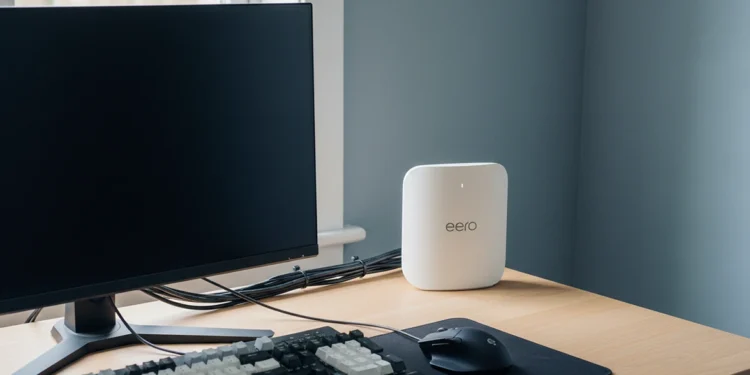
Wasting nearly a thousand dollars on networking hardware that fails to reach the back office is a massive frustration. High-end mesh systems like the Amazon eero Pro 7 hardware promise to end dead zones, but price parity with other titans makes the choice difficult. Identifying the right tool depends on whether a user prioritizes wired throughput or raw signal reach.
Wired throughput and the ten gigabit reality
The inclusion of dual 10GbE ports changes the math for local networking. Most mesh systems bottleneck a fiber connection at the source, but this chip handles massive data streams with ease. Wiring a house backbone becomes a reality when every node supports ten-gigabit speeds.
High-speed ports allow for immediate file transfers between workstations and storage servers. This level of bandwidth satisfies the most demanding home office requirements. Comparing the Amazon eero Pro 7 specifications against older generations reveals a significant jump in wired potential.
Wireless capacity on the 6GHz band
Moving traffic to the 6GHz band feels like driving on an empty highway during rush hour. The tri-band architecture utilizes WiFi 7 specs to push wireless throughput to extreme levels. Removing interference is a clear benefit, and the 320MHz channels provide massive headroom for a house full of active hardware.
This lack of performance-stalling obstructions is the result of letting the chip manage hundreds of simultaneous connections without a stutter. The Multi-Link Operation feature allows the hardware to send data across multiple bands at the same time.
This capability reduces the chance of a dropped signal when moving between nodes. Wireless efficiency reaches a new peak when the hardware can switch frequencies in the middle of a transmission. This is ideal for gaming and 8K streaming, which require the low latency that this high-capacity band provides.
Signal strength and the Orbi comparison
Coverage for a 6,000 square foot property is a bold claim that doesn’t always hold up in reality. While the signal stays strong in open rooms, the compact internal antennas struggle to penetrate thick walls or multiple floors. The Netgear Orbi 770 frequently manages a more consistent reach in challenging home layouts due to its larger antenna arrays.
Signal drop-off becomes noticeable when moving toward the edgets of a typical suburban lot. High-end hardware should provide a signal that doesn’t falter at the garage door. Reading through recent user range tests helps identify if a specific floor plan will cause issues.
Subscription friction and the Amazon environment
Locked features behind a monthly subscription plan turn a premium purchase into a recurring bill. Amazon hides basic parental controls and security tools behind the eero Plus paywall. Looking at the [current eero subscription costs] is necessary to understand the total investment required.
Power users will find the mobile app lacks the granular controls needed for exact network tuning. Simple setups are great for beginners, but they limit the ability to resolve specific interference issues manually. Hidden costs remain the biggest deterrent for those looking for a transparent hardware purchase.
The truths of the WiFi 7 tax
The thrill of 10GbE ports and WiFi 7 speeds makes the Amazon eero Pro 7 hardware a powerhouse for the right user but at what cost? The hardware can handle massive workloads and future-proofs a home for the next wave of high-speed electronics but keep in mind, because of the high cost and subscription-heavy environment make this more of a luxury than a necessity.
The parity in pricing between these two systems means the choice rests entirely on hardware priorities rather than a search for a bargain. The [Amazon eero Pro 7] serves the specific needs of power users requiring high-speed 10GbE throughput within a smart home ecosystem, whereas the Netgear Orbi 770 remains the more reliable selection for those managing a larger home footprint with difficult signal paths.
Enthusiasts who find the Amazon eero Pro 7 features essential for a smart home can find the hardware here. Those requiring the wider reach of the Netgear Orbi 770 should consider that path instead. Making this choice requires a clear understanding of your specific hardware needs rather than a hunt for a lower price.
Wireless Home Networking
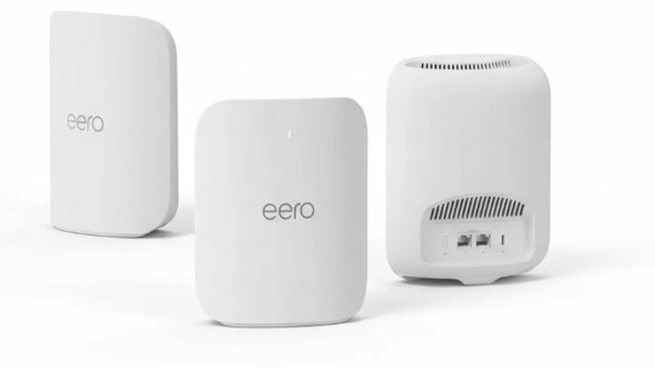
Amazon eero Pro 7
Dual 10GbE ports and WiFi 7 throughput handle 600+ devices across 6,000 square feet. This tri-band gear uses the 6GHz band to eliminate interference and provides maximize speed.